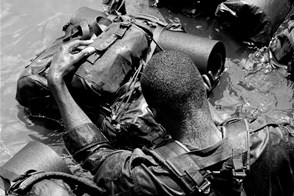
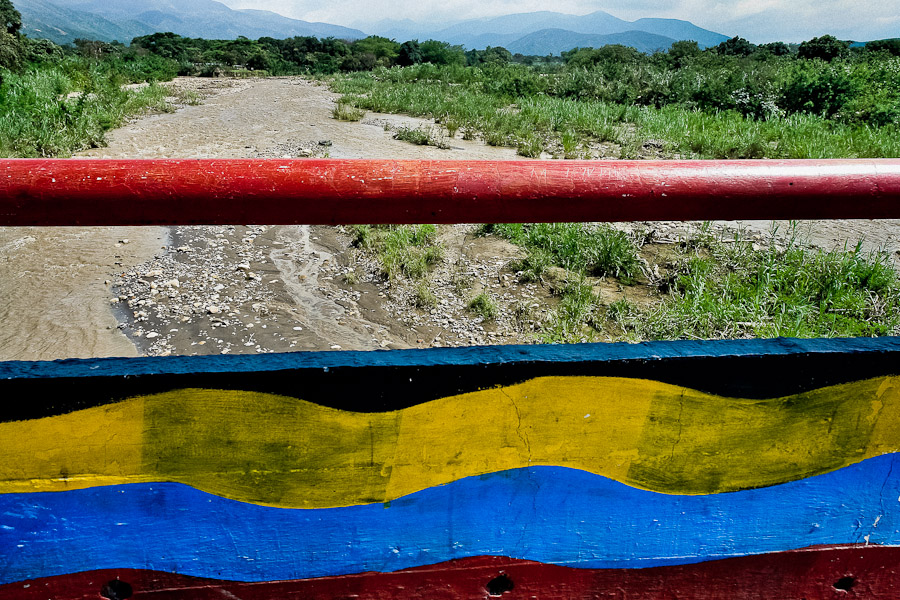
The major part of the Colombia-Venezuela borderline goes through uninhabited jungle areas in Llanos or in Amazonia. 2200 kilometres is impossible to guard.
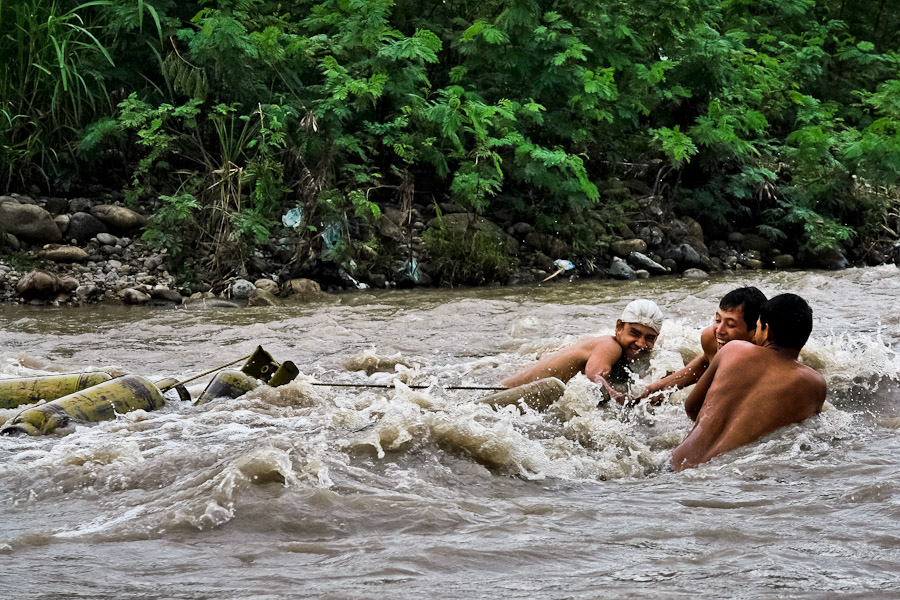
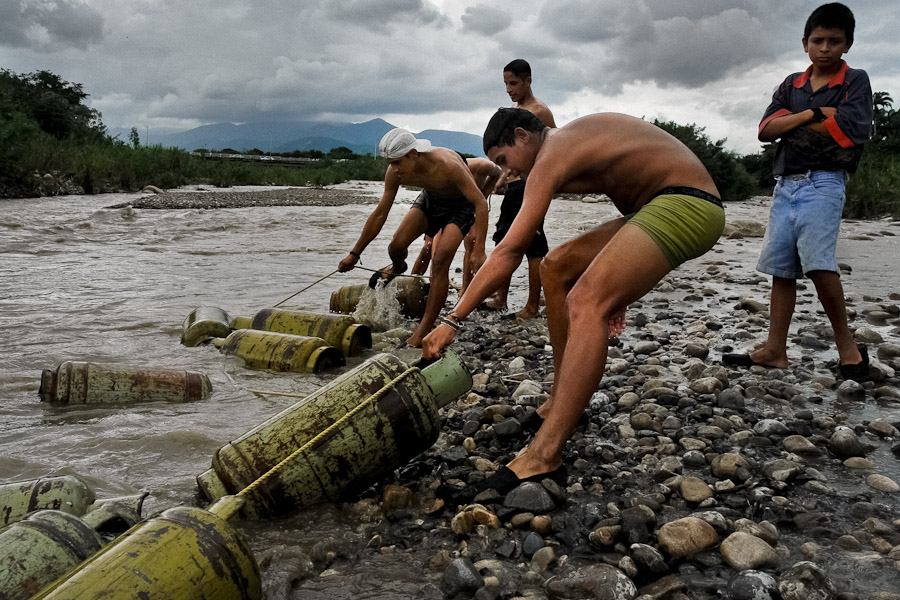
Young Colombian smugglers pulling a rope with gas cylinders tied up on it. They can gain 1-2 USD from one cylinder if they make out the risky journey and sell the contraband in Colombia.
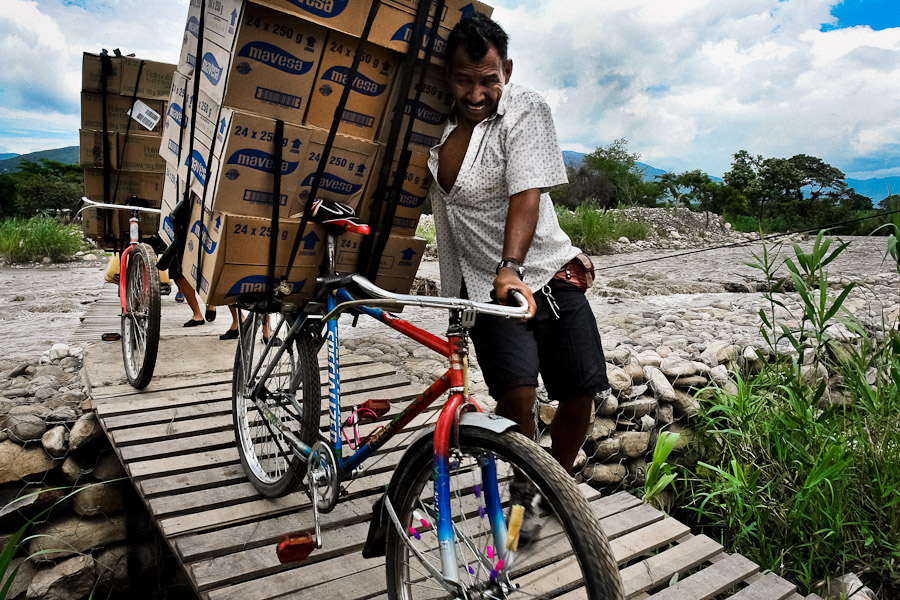
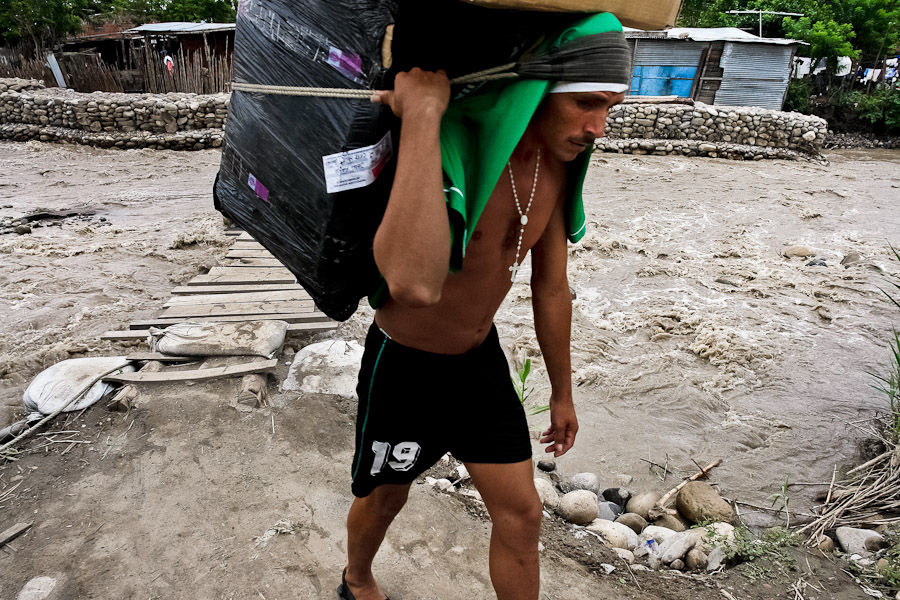
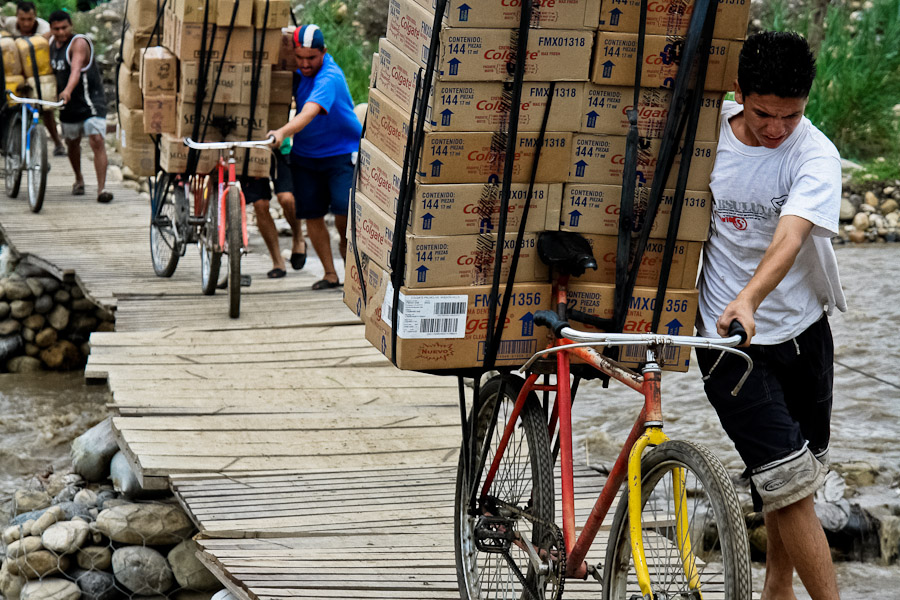
The Colombian border village Parada entirely lives off the contraband. People bring cheap food, toilet paper rolls, car parts from Venezuela.
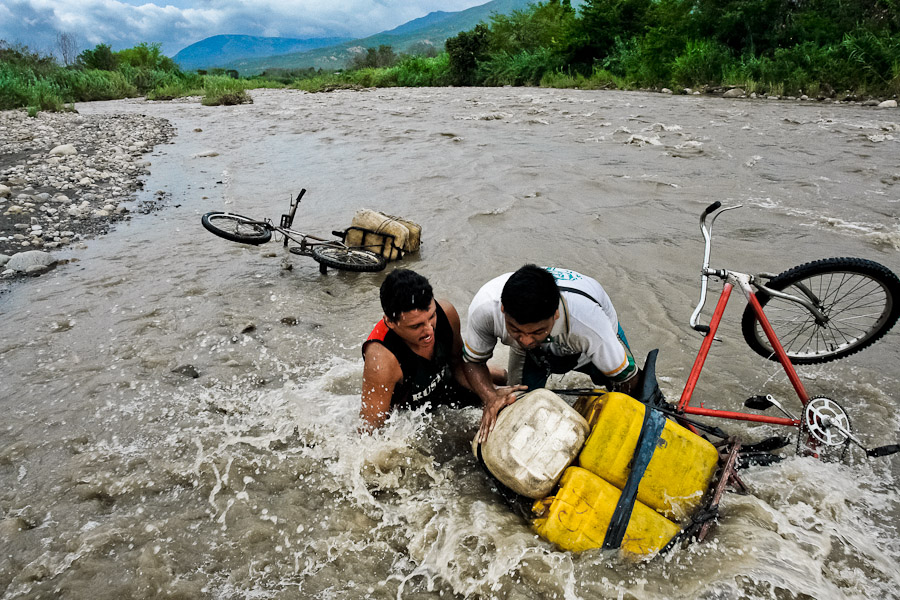
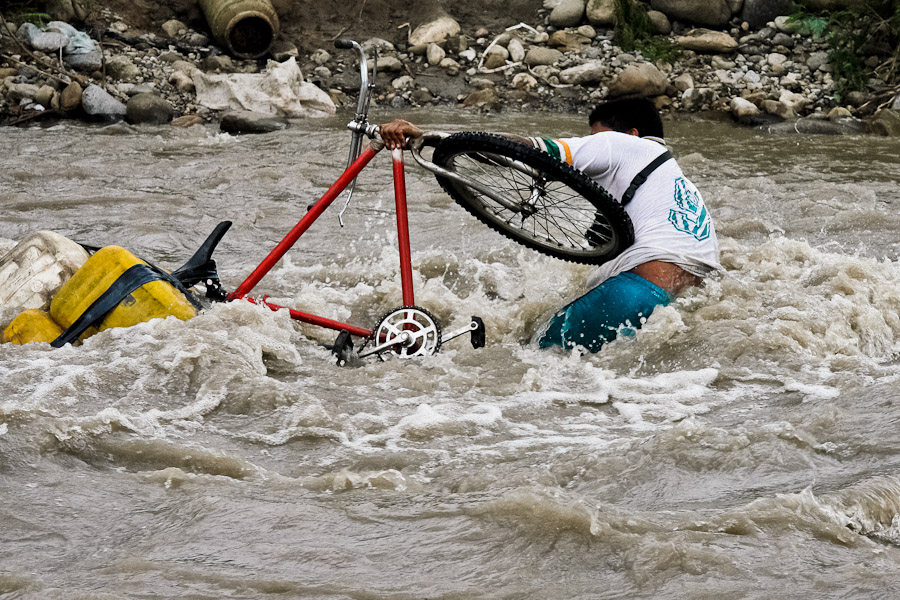
The way the gasoline smugglers cross the wild river is very risky, especially during rainy days when the water level rises to about a man's height.
Some of the contraband journeys are bribed. Venezuelan police (Guardia Nacional) members ask approximately for 0.5 USD for a barrel or a gas cylinder brought across the border.
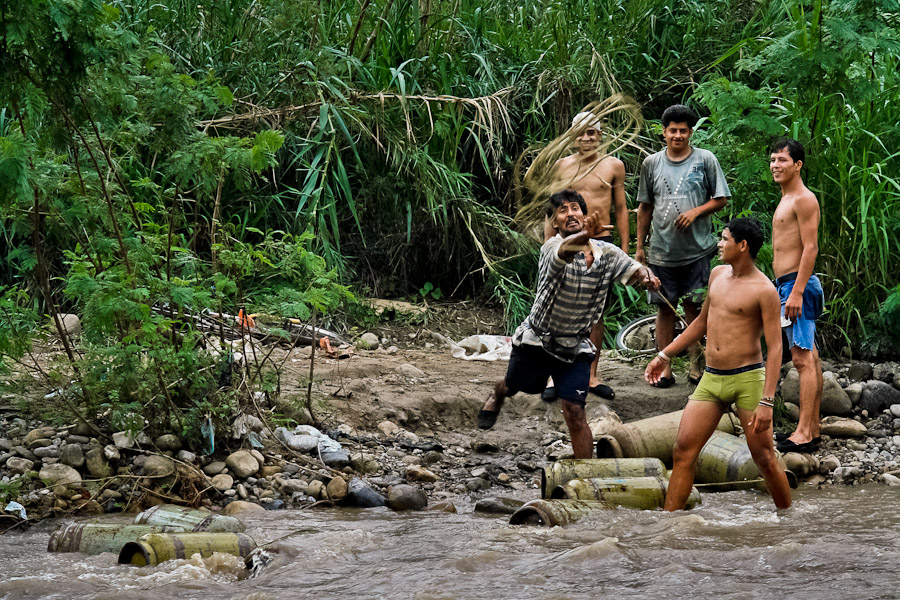
Gas and gasoline smugglers are often chased by Venezuelan Guardia Nacional who - inspite of being bribed - shoot at the smugglers non-lethal projectiles and then sell the abandoned contraband.
It is supposed that cocaine as the most valuable Colombian commodity is smuggled through the Venezuelan border and then it is transported further to the US and Europe.
The flows of contraband on the Colombia-Venezuela borderline is predominantly organized and controlled by paramilitary troops, formerly known as AUC.
A small gasoline smuggler crew can make up to three or four round trips in a day if they are not caught and the river is not very wild. It brings about 5-8 USD to each crew member per day.
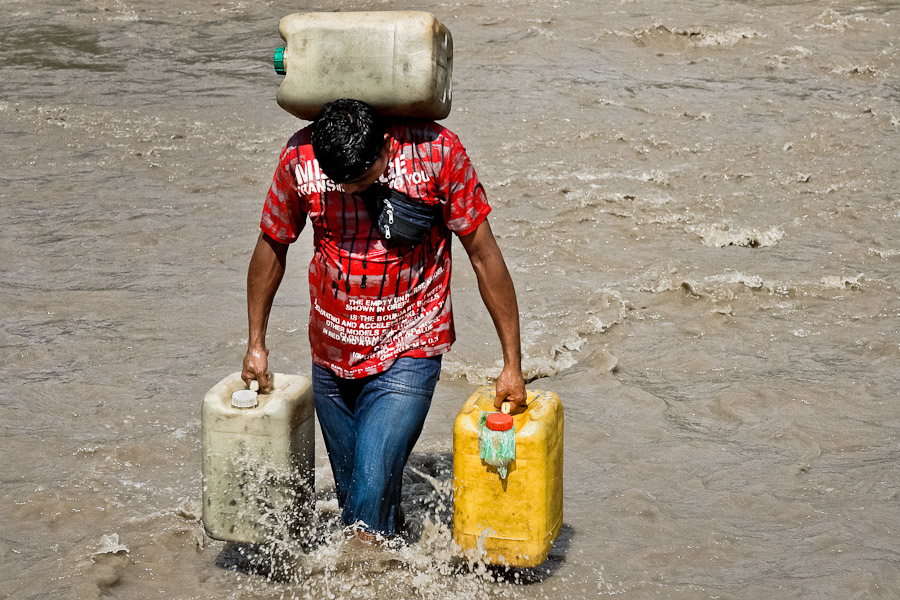
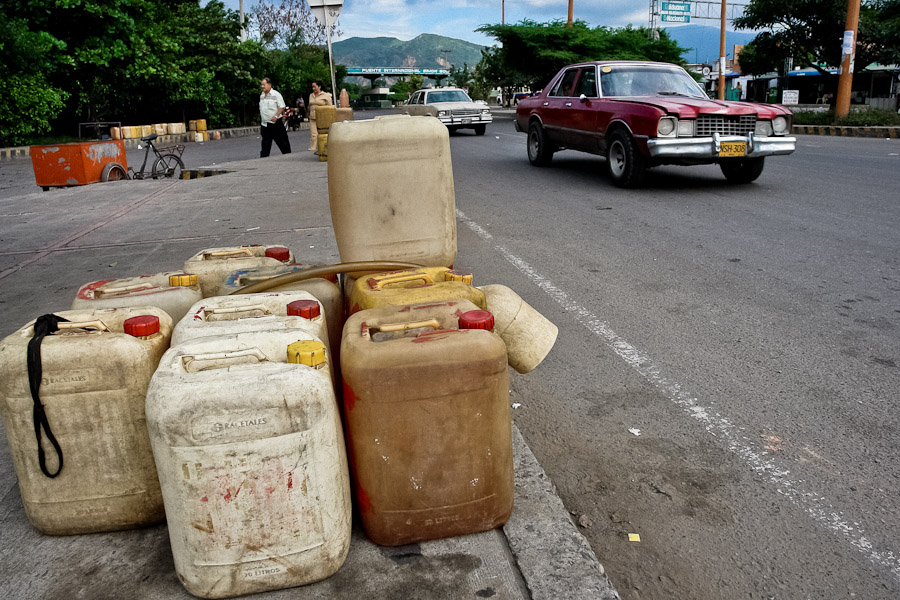
It has been estimated that there are 30 thousand barrels of gasoline crossing illegally from Venezuela to Colombia every day.
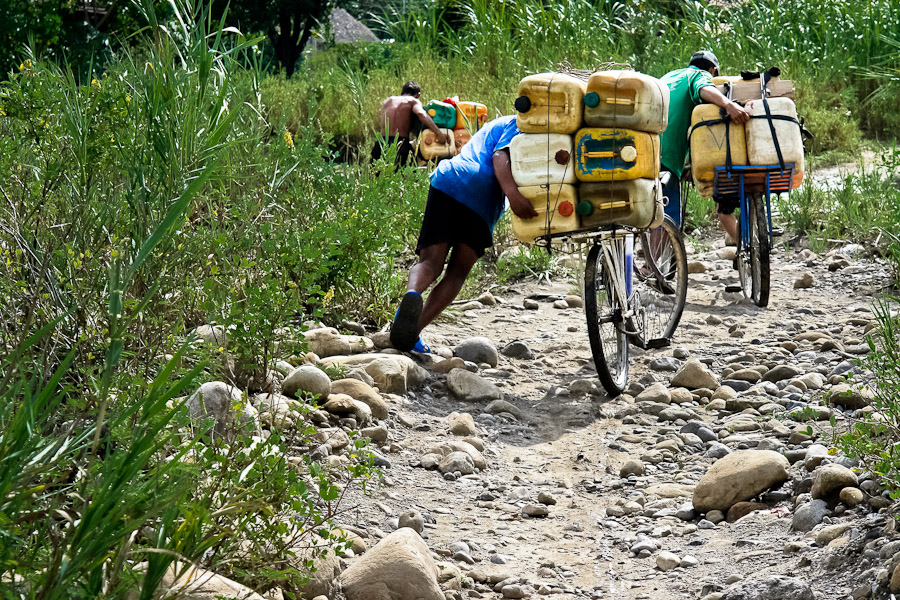
The gasoline price in Venezuela is the cheapest in the world. It is about 12 cents (USD) a gallon. The smuggled barrels are sold along the highways in the Colombian border region.
Contraband
Cúcuta, Colombia – 8 October 2006
A 2200 kilometre long borderline between Colombia and Venezuela is virtually impossible to control. Venezuelan gasoline, being 20 times cheaper than in Colombia, is the most wanted smuggling item, followed by food and car parts, while reputable Colombian clothing flow to Venezuela. There are about 25,000 barrels of gasoline crossing illegally the Venezuelan border every day. The flow of contraband is managed and organized by former Colombian paramilitary forces and the bribed Venezuelan police (Guardia Nacional). The risky contraband smuggling, especially during the rainy season when the river rises, makes a living to hundreds of poor families in communities on both sides of the frontier.
Very Nice
Adiel Oliveiraa
14.08.2009 – 21:20