Every day since the early morning when the sun does not burn there are hundreds of recollectors arriving to La Chureca. It has been estimated that about 2000 people work directly at the dump.
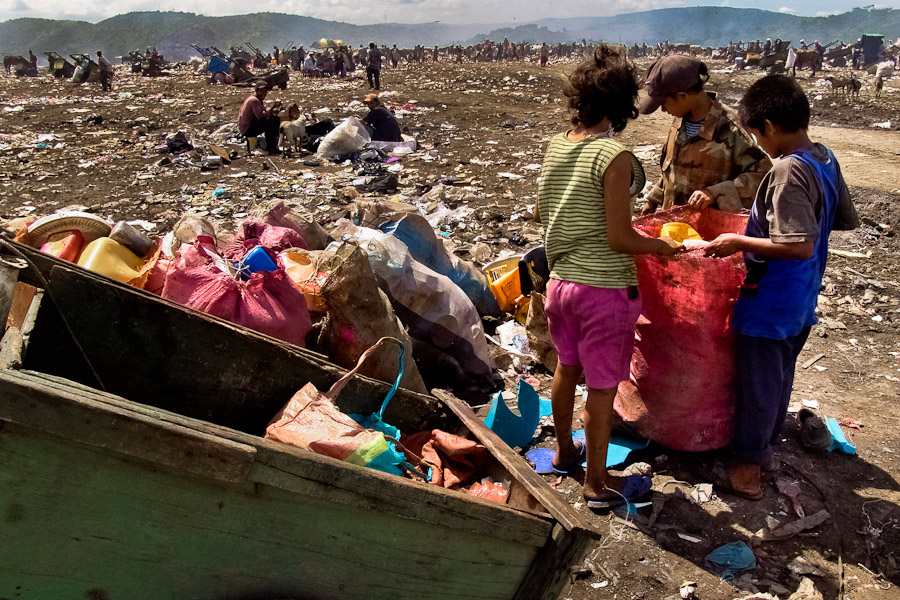
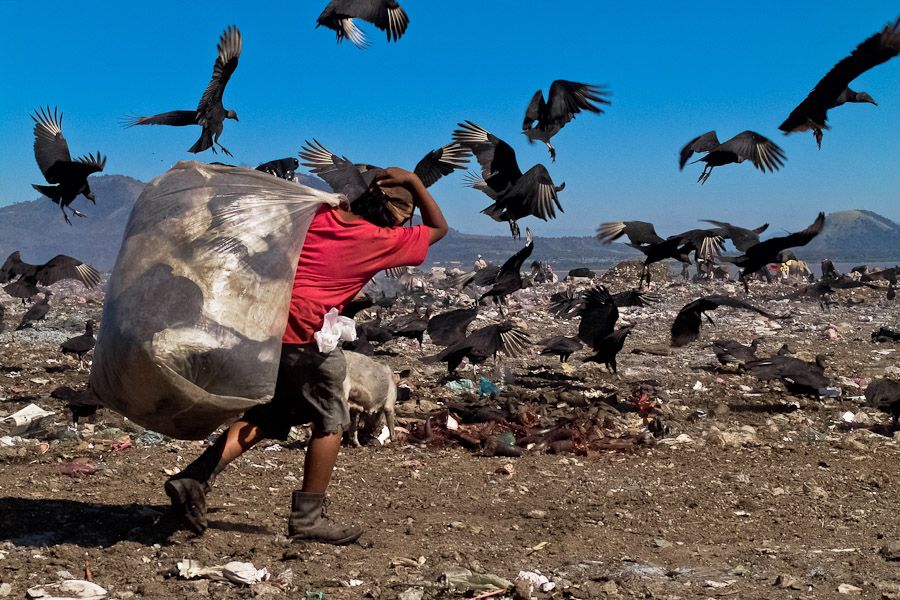
The overwhelming majority of the searchers at the La Chureca garbage dump are families with children for whom recycling is a regular way of making their living.
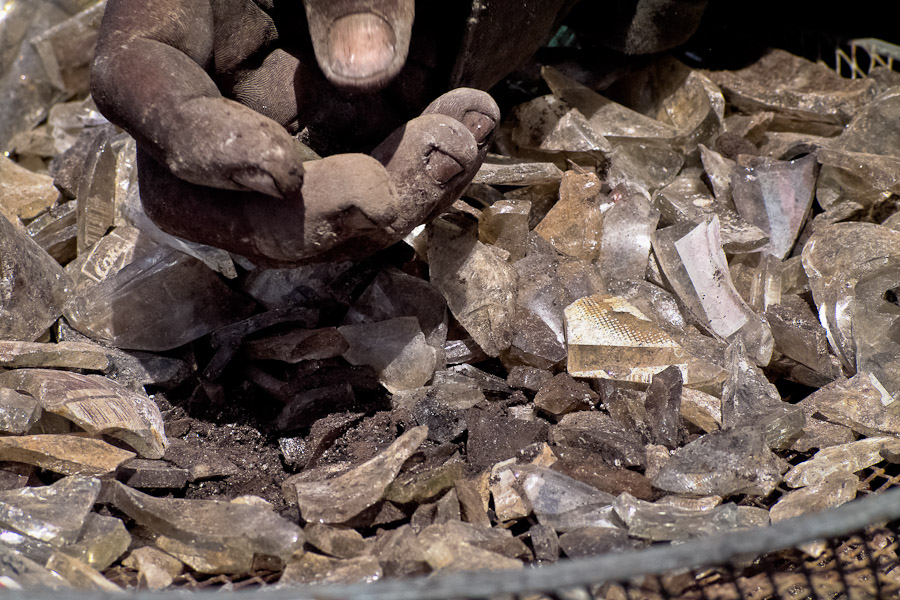
The price of an ordinary dinner on the streets of Managua equals a collection of 25-30 kilograms of broken glass pieces at the La Chureca garbage dump.
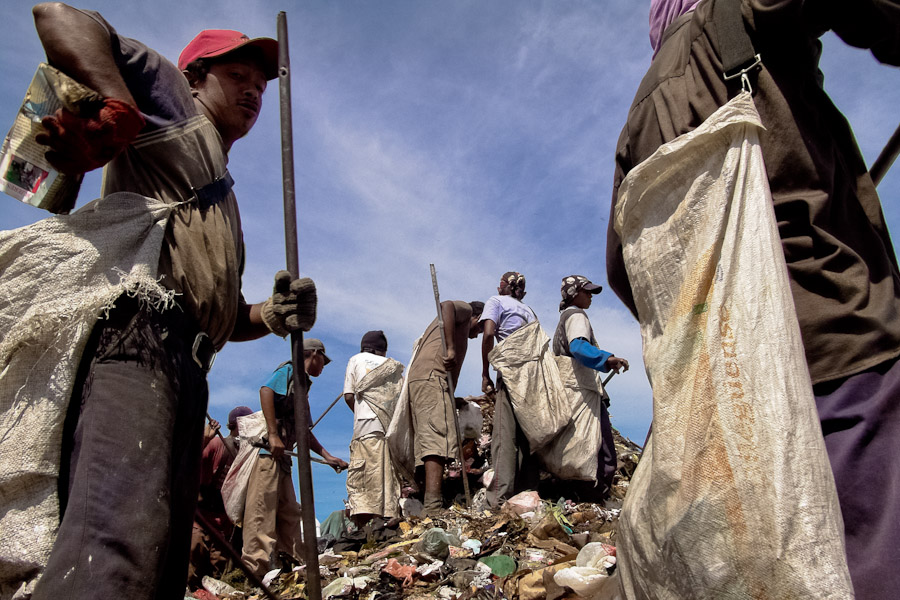
Recyclers in La Chureca search in tons of rotten garbage mainly metals (copper, aluminium, bronze), they use a specially forged hook to get easily through the mass of trash.
Since 1975 La Chureca, the biggest garbage dump in Central America, has spread to cover 70 acres on the shores of a completely contaminated lake Xolotlán.
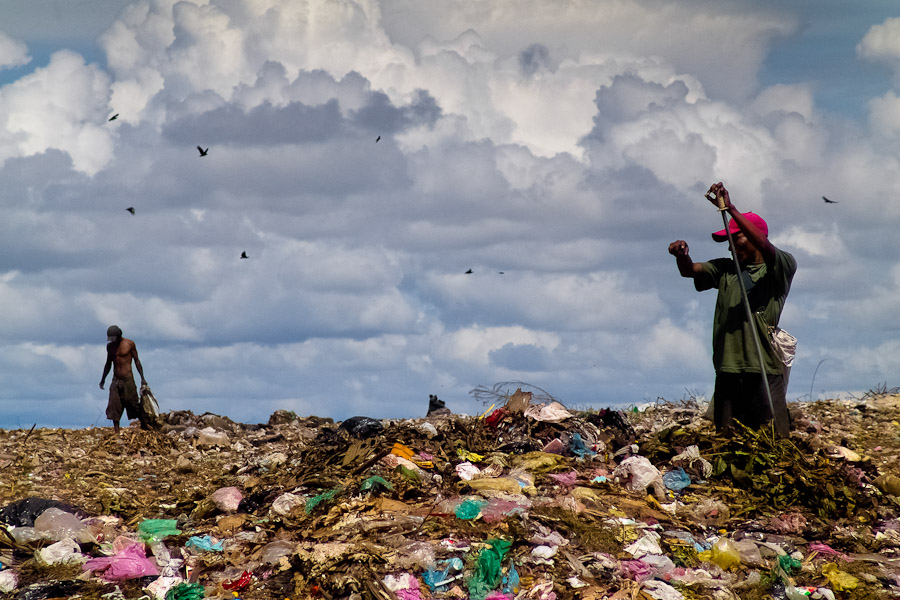
There are no gangs, neither crews at La Chureca garbage dump. Each person here works entirely on his own. Only families may share what their members find but not in all cases.
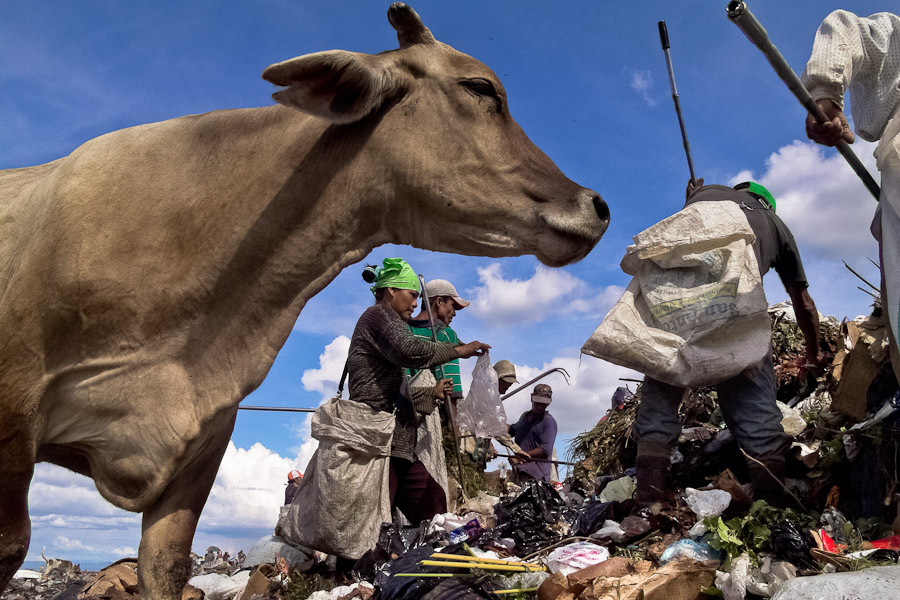
More than 30 per cent of the children from La Chureca garbage dump show high levels of lead, mercury and DDT in blood due to a continuous contact with garbage, 40 per cent of them suffer from cutaneous diseases.
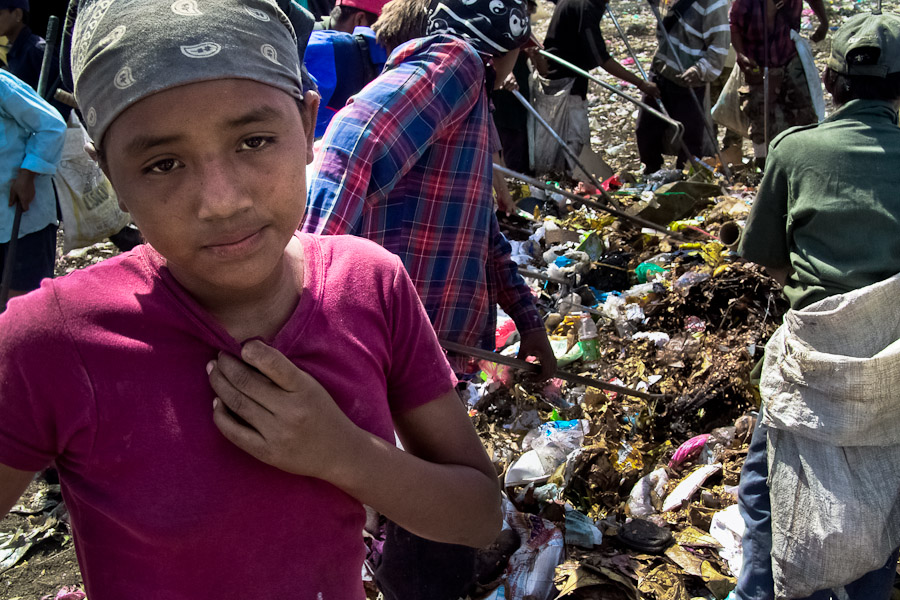
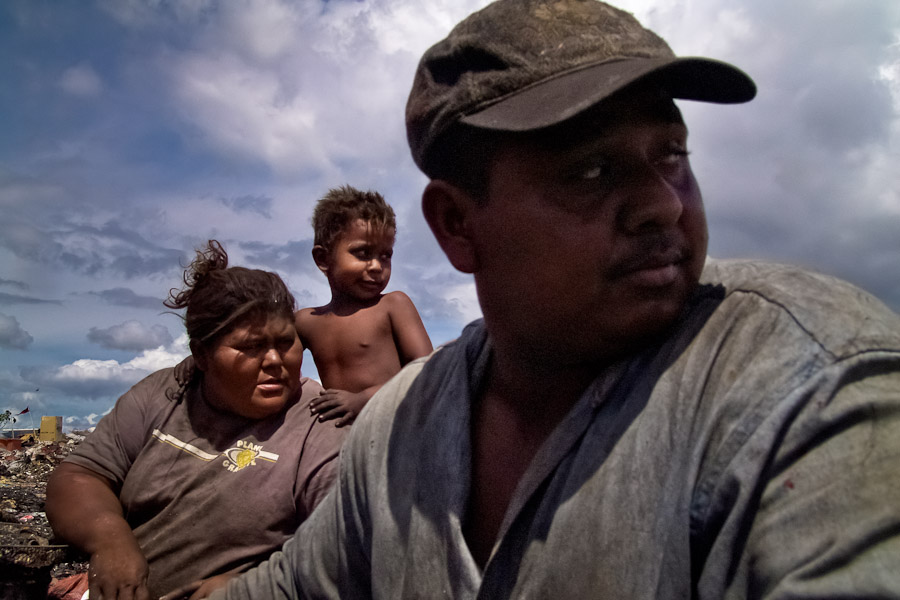
Inspite of the inbearable hot climate at the La Chureca dump (temperatures over 40°C) searches keep their bodies and heads carefully covered to avoid sunburn and infections.
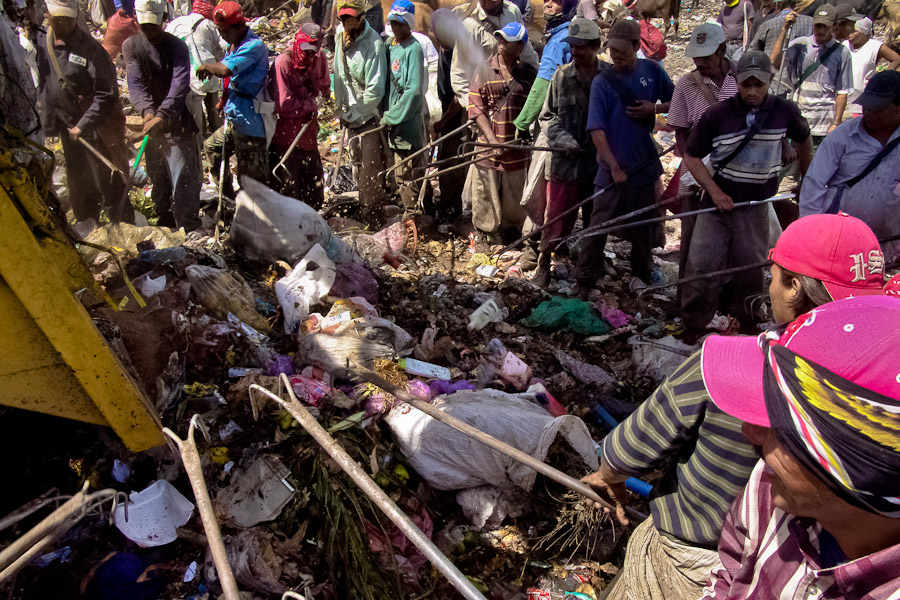
The children who work at La Chureca garbage dump very often eat the food they find on the dump, none of them goes to school. Many of them sniff the shoe glue, the drug of the poorest.
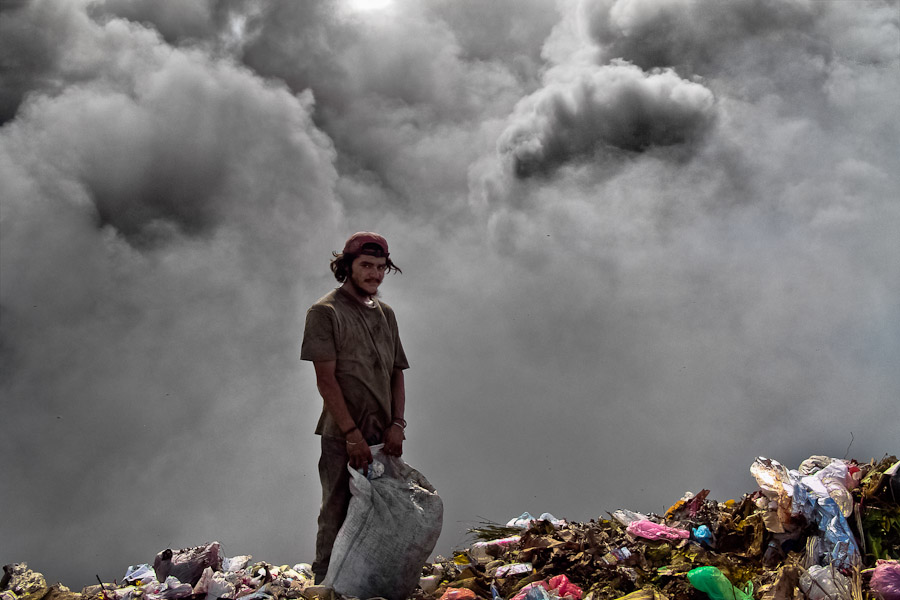
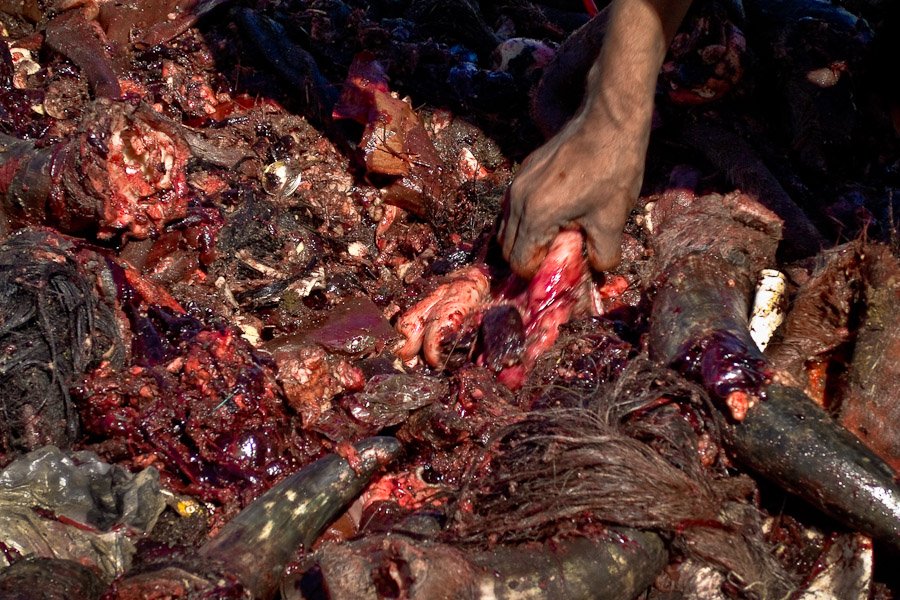
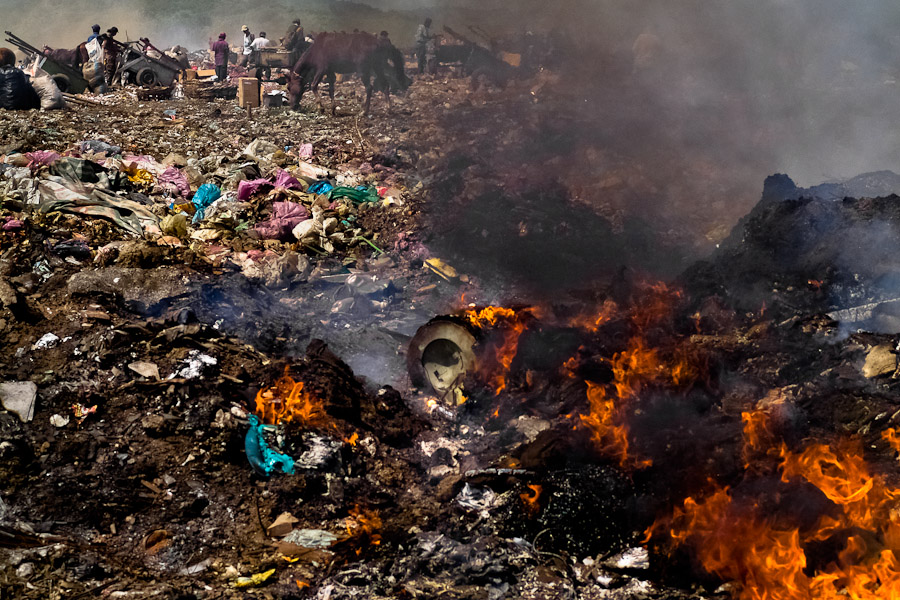
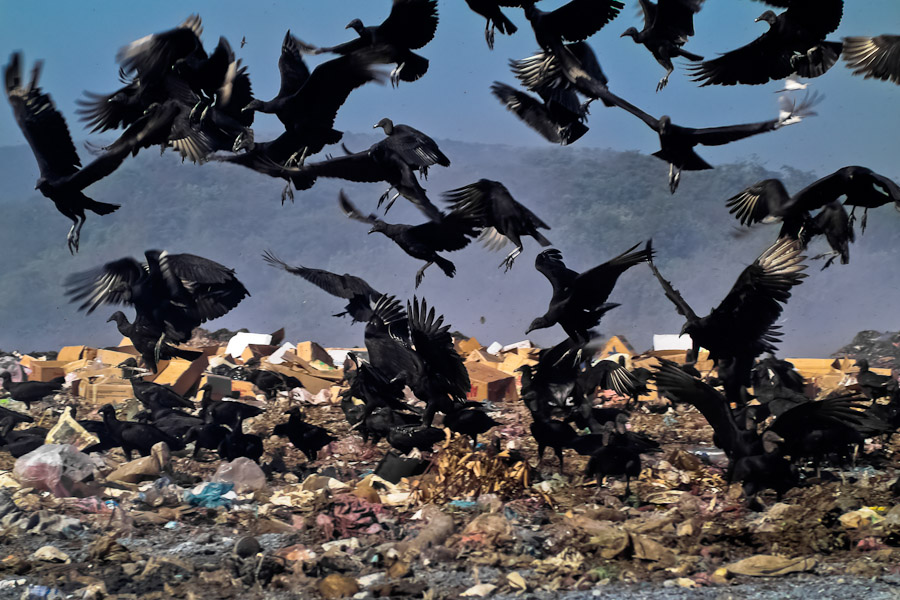
Everything is brought to La Chureca garbage dump, there is no garbage separation. Inorganic waste, food, dead animals, cans, glass, metals, trash from demolitions, also infectious biowaste.
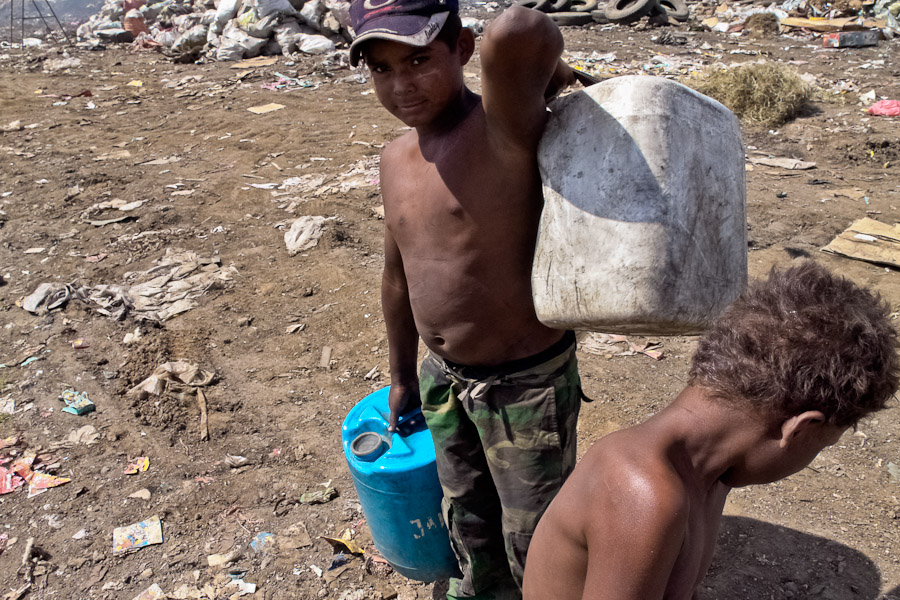
A young boy carrying barrels of contaminated water. There is a neighbourhood of about 200 families which is situated right inside the area of the La Chureca garbage dump.
Every day the city of Managua turns out about 1500 tons of the trash which is taken out to La Chureca garbage dump.
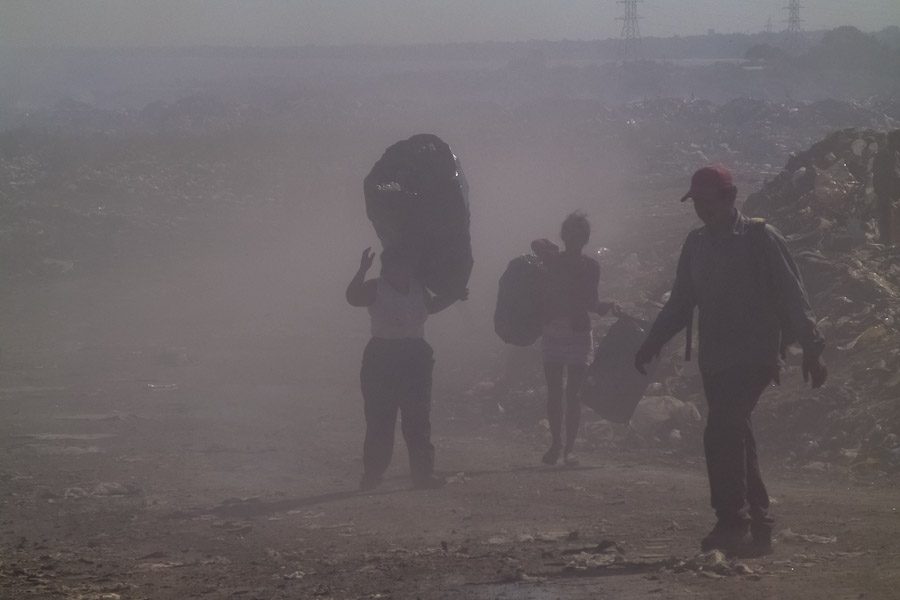
Constant spontaneous fires at La Chureca garbage dump cause air pollution, respiratory disease of those who work at the dump and affect thousands of inhabitants from neighbouring districts.
The inhabitants of Managua say that there is the end of the world in Nicaragua. It is called La Chureca, the garbage dump.
Life of a Scavenger
Managua, Nicaragua – November 2004
La Chureca is the biggest garbage dump in Central America, it is a lively sewer of the capital of Nicaragua. This dumping ground, which has 70 acres, lies on the shores of a completely contaminated lake Xolotlán. The estimated amount of the untreated waste accumulated here since 1975 is 5 million tons. Everything is brought here without exception, there is no garbage separation. Inorganic waste, food, dead animals, cans, glass, metals, trash from demolitions, also infectious biowaste. La Chureca is the only dump in Central America where solid waste from hospitals is brought: human remains from surgery, blood.
Nicaragua is the poorest country of Central America. Hundreds of human waste recyclers search in tons of smouldering garbage mainly metals (copper, aluminium, bronze), others concentrate on glass which is cheap, but in bigger amount. (To compare: the price of ordinary dinner on the streets of Managua equals a collection of 20-30 kilos of glass pieces a day). The overwhelming majority of the searchers are families with children for whom recycling is a normal way how to make their living. The children very often eat the food they find on the dump, none of them goes to school. Many of them sniff glue, the drug of the poorest.
According to a study made by the Faculty of Medicine of the National Autonomous University in Managua (UNAN), more than 30 per cent of the children who live on the garbage dump show high levels of lead, mercury and DDT in blood due to a continuous contact with garbage and consumption of fish from the contaminated lake, 40 per cent of them have cutaneous diseases and more than a half of the children have parasites in their intestines.
The inhabitants of Managua say that there is the end of the world in Nicaragua. It si called La Chureca.
no comments yet